
PSLE#23 English Oral – Clearing the Air: Stricter Rules Against Vaping
PSLEhacker Episode #23 - TREE Method

Date of News Article: 28 August 2025 (Based on the actual MOE/MOH press conference) Source: Adapted from The Straits Times & CNA (Education & Health) words
Reading Passage:
In recent years, the use of electronic vaporisers, or vapes, among youths has become a pressing concern in Singapore. From 2022 to 2024, an average of 3,100 students from schools and junior colleges were caught annually for vaping offences. To combat this rising trend, the government announced a robust, whole-of-government approach to curb the supply and demand for e-vaporisers.
A major concern is that many young people mistakenly believe vaping is a safer alternative to traditional smoking. However, vapes expose users to a combination of harmful chemical substances and cancer-causing agents. Recently, authorities have strictly warned against “Kpods,” which are vapes laced with etomidate. Etomidate can cause severe effects, from confusion and loss of consciousness to even death, and is now classified as a Class C controlled drug.
To protect students, the Ministry of Education implemented stricter disciplinary measures starting September 1, 2025. First-time offenders in schools now face up to three days of detention and suspension, in addition to having their conduct grade adjusted. Boys may also receive one stroke of the cane. Fines issued by the Health Sciences Authority (HSA) for underage users have also increased significantly.
Beyond punishments, schools focus heavily on prevention. Character and Citizenship Education (CCE) lessons help students gain social-emotional skills to resist peer pressure. Peer support structures are also vital; students are taught to listen actively and encourage their peers to seek help early. By staying informed and making a meaningful and wise choice to reject vaping, youths can safeguard their health and future.
Word Count: 295
PSLE Oral Practice: Stimulus-Based Conversation (TREE Method)
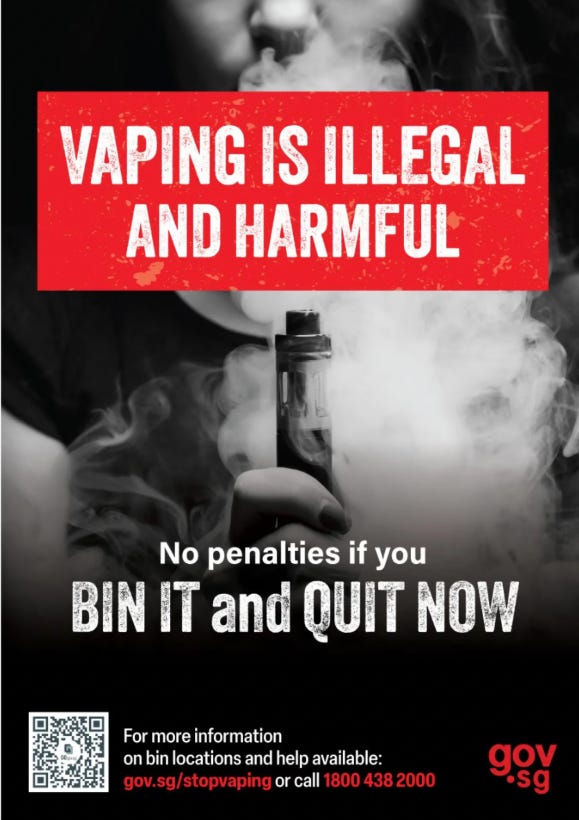
Question 1: Visual Stimulus
“Look at the picture. What is the poster warning students about, and why is this an important message in schools?”
Thought (T): The poster is warning students that vaping is strictly prohibited, illegal, and extremely harmful to their health.
Reason (R): This is a critical message because some teenagers wrongly believe that vapes, especially those with sweet flavours, are harmless. The poster clearly educates them that vaping contains toxic chemicals that can permanently damage their developing brains and lungs.
Experience (E): In my school, our principal frequently reminds us during morning assembly that being caught with a vape will result in severe consequences like suspension and a poor conduct grade. Seeing these reminders helps to inculcate a strong sense of discipline among the students.
Ending (E): Therefore, putting up such educational posters is a proactive and wise choice to protect the well-being of the student population.
Question 2: Personal Opinion
“Why do you think some youths are tempted to try vaping, and how would you react if a friend offered you a vape?”
Thought (T): I think many youths are tempted to vape primarily due to peer pressure and a misguided desire to fit in or relieve stress.
Reason (R): When they see their friends doing it, they might feel left out if they refuse. Furthermore, the sweet smells of the vape juice trick them into thinking it is just like candy, masking the real danger of addiction.
Experience (E): If a friend ever offered me a vape, I would firmly say “no” and walk away. Even if they tease me or I have to byte the bullet and risk losing their friendship, my health is much more important.
Ending (E): It takes courage to stand up to peer pressure, but doing so ensures we do not fall into a dangerous and illegal habit.
Question 3: Solution-Based
“If you discovered that a classmate was addicted to vaping, how could you help them stop?”
Thought (T): I would try to persuade them to seek professional help from a trusted teacher or the school counsellor.
Reason (R): Vaping is highly addictive, and it is very difficult for a person to quit on their own without proper guidance and support.
Experience (E): I would first speak to them privately and express my concern for their health, reminding them of the severe school punishments if they are caught. If they refuse to listen, I would have to inform a teacher. While it might feel like betraying a friend, getting them the necessary intervention is the only way to truly help them. Looking out for a classmate’s long-term health is how we forge a strong sense of camaraderie and true friendship.
Ending (E): By doing our part to report such issues, we can ensure our school remains a safe, healthy, and vape-free environment.
Theme: School Life / Health / Peer Pressure
Visual Stimulus: A photo of a prominent “No Vaping” poster on a school noticeboard. The poster shows a crossed-out electronic vaporiser and lists the health dangers and legal penalties, warning students to stay nicotine-free.
📖 Vocabulary List
Recalcitrant (Adjective): Having an obstinately uncooperative attitude toward authority or discipline.
Anaesthetic (Noun): A substance that induces insensitivity to pain (used dangerously in illegal vapes like Kpods).
Intervention (Noun): Action taken to improve a situation, especially a medical disorder or a bad habit.
Misguided (Adjective): Having or showing faulty judgment or reasoning.
Safeguard (Verb): Protect from harm or damage with an appropriate measure.
🌟 Idiom of the Day
“Nip it in the bud”
Meaning: To stop a bad situation or bad habit from becoming worse by taking action at an early stage.
PSLE Oral Usage: “If we notice a friend trying out vaping, we must alert a teacher immediately to nip the problem in the bud before it becomes a severe addiction.”