
PSLE#18 English Oral - Navigating the Storm: Dealing with Flash Floods
PSLEhacker Episode #18 - TREE Method

Date of News Article: 18 February 2026 Source: Adapted from The Straits Times (Weather & Environment)
Reading Passage:
In recent years, Singaporeans have had to adapt to increasingly erratic weather patterns. Sudden, heavy downpours that transform clear skies into gloomy thunderstorms within minutes have become a common occurrence. This extreme weather, driven by global climate change, often leads to localized flash floods, especially in low-lying areas across the island.
When a flash flood occurs, roads can become submerged, creating dangerous conditions for motorists and pedestrians alike. To manage this, the national water agency, PUB, has been working tirelessly to upgrade Singapore’s drainage infrastructure. They are widening canals and building massive underground detention tanks to temporarily store excess rainwater, preventing it from overflowing onto the streets.
However, infrastructure alone cannot completely eliminate the risk of floods. Public readiness is just as crucial. Motorists are constantly reminded to drive cautiously, avoid flooded areas, and obey electronic signboards on the expressways. Pedestrians are advised to seek shelter and avoid walking through floodwaters, which can hide open drains and debris.
To help citizens stay informed, weather warning systems and mobile apps send out real-time alerts about heavy rain and rising water levels. By staying vigilant and prepared, we take a proactive approach to our own safety. As climate change continues to bring unpredictable weather, it is a meaningful and wise choice for everyone to understand these risks. Learning to adapt ensures that Singapore remains a strong and resilient nation, ready to weather any storm.
Word Count: 280 words
PSLE Oral Practice: Stimulus-Based Conversation (TREE Method)
Question 1: Visual Stimulus
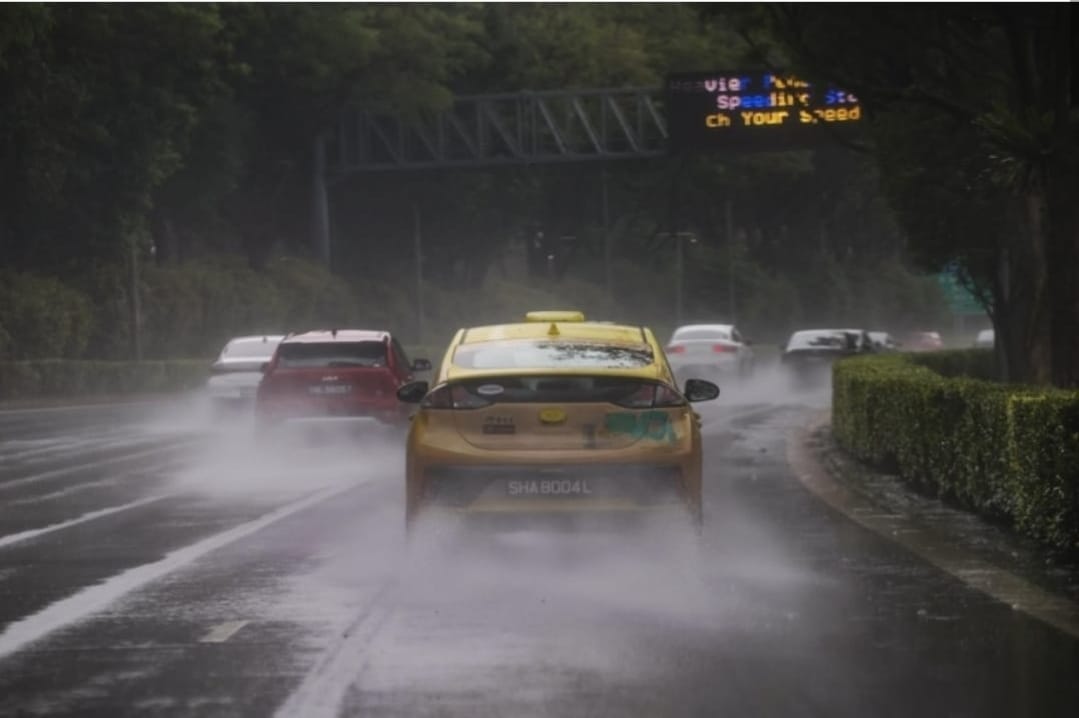
“Look at the picture. What are the drivers experiencing, and what precautions should they take in such weather?”
Thought (T): The drivers are driving through a very heavy downpour and a flooded road, which makes driving quite dangerous.
Reason (R): Because the road is wet and submerged in water, the tires can lose their grip and skid. Also, the heavy rain causes poor visibility. Drivers must slow down, turn on their headlights, and keep a safe distance from other cars.
Experience (E): I remember being in my father’s car during a sudden thunderstorm on the expressway. The rain was so heavy we could barely see the vehicle in front of us, and the electronic signboards were flashing warnings. My father had to drive very slowly and carefully to ensure our safety.
Ending (E): Therefore, staying vigilant and cautious on the road is a wise choice during such unpredictable weather conditions.
Question 2: Personal Opinion
“Have you ever been caught in a sudden heavy downpour? How did you react?”
Thought (T): Yes, I have been caught in a sudden thunderstorm on my way home from school.
Reason (R): The weather in Singapore can change very quickly from sunny to stormy, and it can be quite stressful if you are not prepared for it.
Experience (E): Once, I forgot to pack my umbrella and had to run to the nearest bus stop to take shelter with many other commuters. We had to wait for almost an hour while the rain poured and the nearby drains started to fill up rapidly. To pass the time, I chatted with a schoolmate, which helped to forge a sense of camaraderie, but we were still worried about how to get home.
Ending (E): Ever since that day, I make it a proactive habit to carry a foldable umbrella in my school bag, come rain or shine.
Question 3: Solution-Based
“With climate change causing more extreme weather like flash floods, what can Singapore do to prepare for the future?”
Thought (T): Singapore needs to continuously improve its drainage infrastructure and educate the public on climate change.
Reason (R): Because our island is low-lying, we are very vulnerable to rising sea levels and intense rain. We need better systems to hold the water and better awareness of why this is happening.
Experience (E): For example, the government has been widening major canals to hold more rainwater during storms. In school, our teachers inculcate in us the importance of reducing our carbon footprint—like saving electricity and recycling—so we understand how our daily actions impact global warming and weather patterns.
Ending (E): By investing in strong infrastructure and educating the younger generation, we can build a resilient Singapore that is prepared for future environmental challenges.
Subscribe to us before you continue …………….
Theme: Extreme Weather / Climate Change / Safety Visual Stimulus: A photo of cars, including a yellow taxi, driving on a wet, partially flooded road in Singapore during a heavy downpour. Water is splashing up heavily from the tires, and visibility is poor due to the rain. In the background, an electronic signboard warns drivers about speeding.
📖 Vocabulary List
Erratic (Adjective): Not even or regular in pattern or movement; unpredictable.
Submerged (Adjective): Completely covered by water.
Infrastructure (Noun): The basic physical and organizational structures and facilities (e.g. buildings, roads, power supplies) needed for the operation of a society.
Vigilant (Adjective): Keeping careful watch for possible danger or difficulties.
Resilient (Adjective): Able to withstand or recover quickly from difficult conditions.
🌟 Idiom of the Day
“Come rain or shine”
Meaning: No matter what the circumstances are; whether it rains or the sun shines.
PSLE Oral Usage: “I always make sure to pack my umbrella in my bag, come rain or shine, because the weather is so unpredictable.”