
PSLE#30 English Oral – The Soul of Singapore: Preserving Our Hawker Heritage
PSLEhacker Episode #30 - OREO Method

Date of News Article: 16 December 2020 (Based on the UNESCO inscription of Singapore’s Hawker Culture) Source: Adapted from The Straits Times & UNESCO (Culture & Heritage)
Reading Passage:
In December 2020, Singapore’s Hawker Culture was officially inscribed on the UNESCO Representative List of the Intangible Cultural Heritage of Humanity. This prestigious recognition celebrates our hawker centres as “community dining rooms” where people from all walks of life gather to share a meal. From Hainanese Chicken Rice to Satay and Roti Prata, these dishes are more than just food; they are a vital part of our national identity.
However, the future of this heritage faces a significant challenge: an ageing workforce. Many veteran hawkers, who have spent decades perfecting their recipes, are approaching retirement. To ensure these flavours do not disappear, a new generation of “hawkerpreneurs” is stepping up. These younger Singaporeans are leaving office jobs to pick up the ladle, often infusing traditional recipes with modern twists or more efficient cooking techniques.
The government has also introduced the Hawker Development Programme to support these newcomers with subsidies and mentorship from seasoned masters. Ultimately, the survival of this culture depends on us—the customers. By continuing to frequent our local hawker centres and appreciating the hard work that goes into every bowl, we play a part in keeping this flame alive.
Choosing to support our local hawker heritage is a meaningful and wise choice. When we inculcate a love for our traditional foods in the next generation, we take a proactive step in ensuring that Singapore’s unique cultural “soul” remains vibrant for many years to come.
Word Count: 295 words
PSLE Oral Practice: Stimulus-Based Conversation (OREO Method)
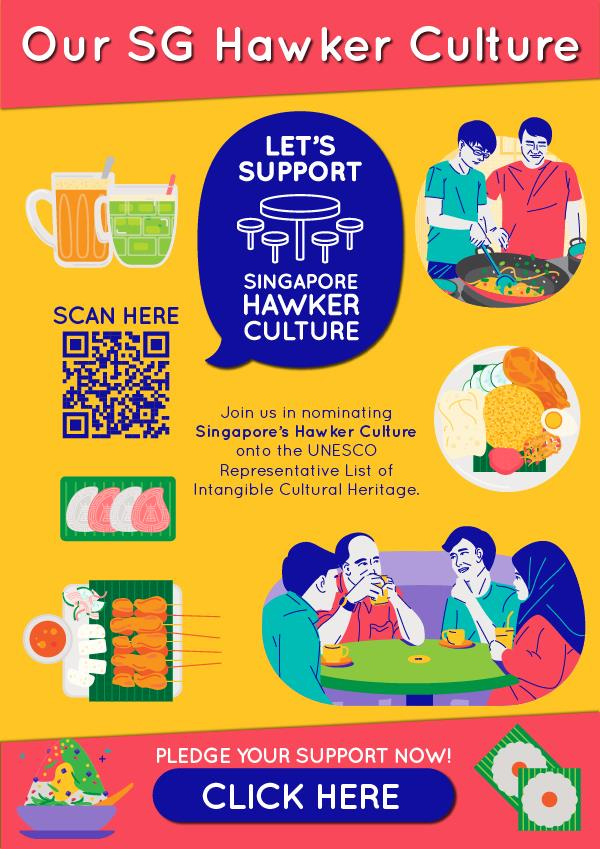
Question 1: Visual Stimulus
“Look at the picture. Why do you think hawker centres are described as the ‘community dining rooms’ of Singapore?”
O (Opinion): I strongly believe that hawker centres are the “heart” of our community because they are inclusive spaces where everyone is welcome.
R (Reason): Unlike expensive restaurants, hawker centres offer affordable meals that allow people from all different backgrounds and ages to eat together in a relaxed environment.
E (Example/Experience): Every Sunday, my family visits the hawker centre near our HDB flat. I often see elderly uncles chatting over coffee while young families enjoy their breakfast nearby. This creates a deep sense of reassurance that our community remains close-knit. Seeing the young customer in the photo reminds me of how I always thank the auntie at the fishball noodle stall; it’s a small way to forge a strong sense of camaraderie.
O (Opinion Restated): Thus, it is clear that hawker centres are much more than just places to eat; they are vital social hubs that bind our nation together.
Question 2: Personal Opinion
“What is your favourite hawker dish, and would you ever consider becoming a hawker to keep a family recipe alive?”
O (Opinion): My favourite dish is definitely Satay, and while it is hard work, I would feel honoured to keep my family’s heritage alive.
R (Reason): Being a hawker is physically demanding—standing for long hours in a hot kitchen—but it is also a very noble profession because you are feeding the community and preserving a piece of history.
E (Example/Experience): My grandmother makes a special chili paste that has been passed down for generations. I would hate for that unique flavour to be lost forever. Even if I have to byte the bullet and deal with the heat and early mornings, the smile on a satisfied customer’s face would be worth it.
O (Opinion Restated): Therefore, I believe that being a “hawkerpreneur” is a meaningful and wise choice for anyone passionate about our culture.
Question 3: Solution-Based
“How can we encourage more young Singaporeans to appreciate and support our hawker culture?”
O (Opinion): I think the best way is to integrate hawker heritage into our school activities and social media.
R (Reason): Many youths today prefer air-conditioned cafes. We need to show them that hawker food is not only delicious and affordable but also a source of national pride.
E (Example/Experience): Schools could organize “Hawker Heritage Days” where students visit stalls to interview hawkers about their life stories. We could also use platforms like TikTok or Instagram to feature “hidden gems” in our neighbourhoods. If we are proactive in sharing these stories, more youths will realize that supporting hawkers is a wise choice for our future.
O (Opinion Restated): By making hawker culture “cool” for the younger generation, we can ensure that our UNESCO heritage continues to thrive.
Helps and guide……………..
📖 Vocabulary List
Intangible (Adjective): Unable to be touched; not having physical presence (referring to culture/traditions).
Inscription (Noun): The action of enrolling or being enrolled in a list or record (e.g., UNESCO list).
Veteran (Noun): A person who has had long experience in a particular field.
Subsidies (Noun): A sum of money granted by the state to help an industry or business keep prices low.
Vibrant (Adjective): Full of energy and life.
🌟 Idiom of the Day
“The way to a person’s heart is through their stomach”
Meaning: You can win someone’s love or favor by providing them with good food.
PSLE Oral Usage: “Singaporeans are a food-loving people, and truly, the way to our national heart is through our stomach and our hawker culture.”