
PLSE#28 English Oral - Play for All: Building Inclusive Spaces in Singapore
PSLEhacker Episode #28 - TREE Method

Date of News Article: 20 January 2026 (Based on Singapore’s ongoing initiatives to build inclusive playgrounds islandwide) Source: Adapted from The Straits Times (Community & Society)
Reading Passage:
For decades, the neighbourhood playground has been the heart of Singapore’s HDB estates. It is where friendships are forged and fond childhood memories are made. However, for children with physical disabilities or special needs, standard playgrounds often present insurmountable barriers, leaving them to watch from the sidelines.
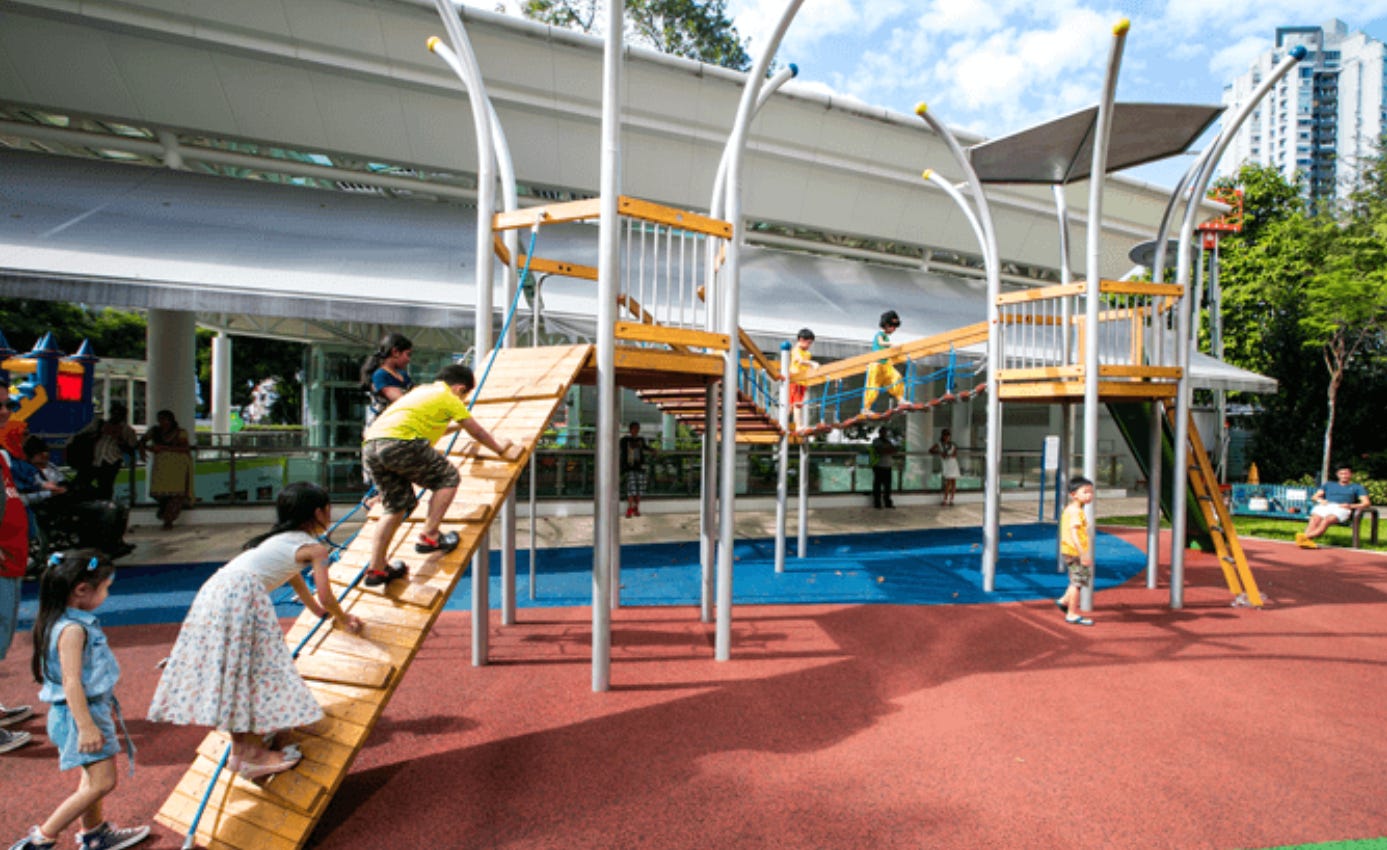
To ensure that no child is left behind, Singapore is actively redesigning its recreational spaces. Today, inclusive playgrounds are sprouting up across our island. These thoughtful spaces feature ramped access, flush surfaces for wheelchairs, and supportive bucket swings. Furthermore, they include sensory play panels with different textures and musical elements, providing a safe and engaging environment for children with conditions like autism.
The true beauty of an inclusive playground extends far beyond its physical infrastructure. It serves as a powerful social bridge. When children of diverse abilities play side by side, it naturally breaks down stigmas and inculcates empathy from a tender age. Able-bodied children learn to interact gently and inclusively, realising that despite their physical differences, every child shares the same fundamental desire to play and have fun.
Creating a truly gracious society requires a collective effort. Parents and educators must take a proactive role in guiding youths to embrace diversity. By stepping out of our comfort zones to interact with those who are different from us, we make a meaningful and wise choice. Embracing inclusivity ensures that our public spaces reflect the warmth of our nation, proving that in Singapore, every child deserves a turn on the swing.
Word Count: 292 words
PSLE Oral Practice: Stimulus-Based Conversation (TREE Method)
Question 1: Visual Stimulus
“Look at the picture. What makes this playground special, and how does it benefit the children playing there?”
Thought (T): This is an inclusive playground designed so that children with physical disabilities can play safely alongside able-bodied children.
Reason (R): Unlike traditional playgrounds with steps or sand, this merry-go-round is built flat on the ground so the boy’s wheelchair can roll onto it easily. It benefits the children because it removes physical barriers, allowing them to enjoy the thrill of playing without feeling left out.
Experience (E): Seeing the girl helping to push the merry-go-round warms my heart and gives me a deep sense of reassurance. It shows that when we provide the right facilities, children will naturally play together and forge a strong sense of camaraderie, regardless of their physical abilities.
Ending (E): Therefore, building such playgrounds is a meaningful and wise choice for a caring society.
Question 2: Personal Opinion
“If you were at the playground and saw a child with special needs playing alone, how would you react?”
Thought (T): I would definitely approach the child with a friendly smile and invite them to join my game.
Reason (R): A child with special needs might feel shy or worried that other children might not want to play with them. By taking the first step to welcome them, I can help them feel accepted and valued.
Experience (E): My parents always inculcate in me the importance of treating everyone with respect and kindness. Even if I feel a little nervous because I am unsure how to communicate at first, I would bite the bullet and simply say “hello.” We could easily share a swing or play a simple game of catch.
Ending (E): By being proactive and reaching out, I can do my part to make sure nobody feels lonely in our community spaces.
Question 3: Solution-Based
“Besides building inclusive playgrounds, what else can schools or the community do to support people with special needs?”
Thought (T): Schools can organize buddy systems, and the community can continue to improve the accessibility of public transport and shopping malls.
Reason (R): Inclusivity should not stop at the playground; it must be a part of our daily lives. People with special needs require supportive environments to travel, learn, and work independently.
Experience (E): For example, schools could run joint activities or sports days with special education schools, allowing students to interact and learn from one another. Also, the government has been installing more ramps, tactile paving for the blind, and priority lifts in MRT stations. When I see someone struggling, I always make sure to give way or offer to press the lift button for them.
Ending (E): Through better education and continuous upgrading of our public facilities, we can truly build a Singapore that is inclusive for everyone.
Good to read more……………
Theme: Empathy / Inclusivity / Community Cohesion Visual Stimulus: A photo of a brightly coloured inclusive playground in Singapore. In the centre, a boy in a wheelchair is smiling widely as he rides a special merry-go-round that is flush with the ground. A young girl is happily helping to push the merry-go-round, and both children are laughing together.
📖 Vocabulary List
Insurmountable (Adjective): Too great to be overcome (e.g., stairs are an insurmountable barrier for a wheelchair).
Inclusive (Adjective): Not excluding any section of society or any party involved in something.
Sensory (Adjective): Relating to sensation or the physical senses; transmitted or perceived by the senses.
Stigmas (Noun): Marks of disgrace associated with a particular circumstance, quality, or person.
Fundamental (Adjective): Forming a necessary base or core; of central importance.
🌟 Idiom of the Day
“Level the playing field”
Meaning: To create a situation where everyone has a fair and equal chance of succeeding or participating.
PSLE Oral Usage: “Inclusive playgrounds with ramps and wheelchair-friendly swings help to level the playing field so that every child can experience the joy of playing.”